
Yellow Book Issue Two
Jurgis Lietunovas: Radio Venus

Dear reader,
Around a year ago, Elliott and I published the Internet Phone Book. The whole project went beyond our imagination with two sold-out prints, a dozen talks, and weekly emails from people all over the world responding to the book.
We are now working on the second issue. There are so many things we want to experiment with now that we are more familiar with the form. The book will have the same yellow cover and warm paper, but otherwise it will be a complete refresh, with new essays, a new structure, and a new website directory.
Got a personal or poetic site you’d like to have included? Submissions are open until the summer.
With care,
Kristoffer
⊹
Jurgis Lietunovas: Radio Venus
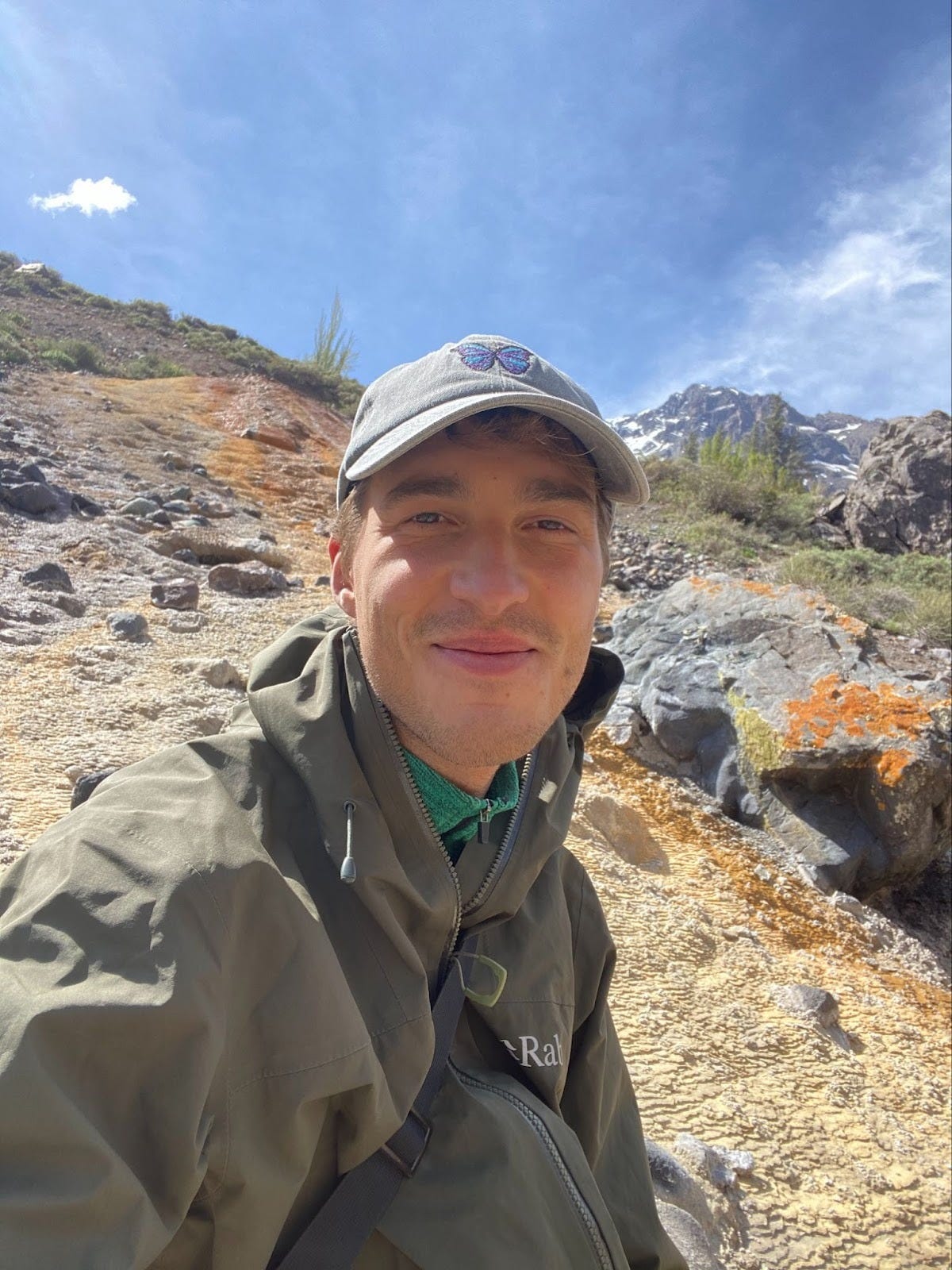
Jurgis Lietunovas is an art director, practicing astrologer and a co-host and editor at CW&CW. He is also the creator of Radio Venus Club.
What is Radio Venus Club?
Radio Venus suggests music using astrology. You enter your birthdate, it calculates your Natal Venus position, and matches you with musicians—from a growing database of around 1,200 artists—whose birth or album release dates share your Venus zodiac sign and degree. In Hellenistic astrology, Venus governs our aesthetic sensibility: the art and music we’re drawn to, and how we express love. Every zodiac sign carries a distinct flavor, and Venus speaks through that specific frequency.
Building the database was the real labor. Google’s AI helped parse publicly available interviews, but more obscure musicians rarely publish their birthdays, so I often use their most iconic album release date instead. Categorizing genres was its own wormhole. There are thousands of subgenres, and I’m deeply grateful to Glenn McDonald, whose incredible project in categorizing every song on Spotify informed how I organized Radio Venus.
My own Venus being in Gemini means I’m genuinely drawn to music that crosses boundaries. I built several main genre threads as entry points for most ears, while leaving room for stranger combinations. The “Today’s Moon / Sun Playlist” captures every musician whose Venus is close to the transiting Sun or Moon—the Sun moves one degree per day, the Moon thirteen, opening different time scales for discovery. Sometimes it gives some unexpected combinations, rap songs followed by classic, or drone. Some kind of story is being woven. In addition, there’s also an “Intercelestial” playlist for artists whose sound simply refuses to be pinned down.
Why did you make it?
As a practicing astrologer and designer, I wanted to create a beautiful, useful tool to foster deeper self-understanding while highlighting the mysterious, sometimes literal workings of astrology. When preparing for astrology readings, I spend time with old manuscripts and their translations, and I’m always arrested by their illustrations. The people who made those celestial images were clearly in contact with something beyond the physical. There’s a quality of light in them, a feeling of something precious and fragile glimpsed against a vast darkness. I wanted to make something that carried that quality: practically useful, but aesthetically transcendental. Something that felt the way Earth looks from space.
I also wanted to test whether Venus actually does what astrology says it does—whether it genuinely shapes aesthetic sensibility. To my surprise, I realized early on that the majority of musicians on Radio Venus had Venus in Gemini, the exact same placement as me! Despite my efforts to stay objective in my curation, my own Venus was pulling the strings. But as I added microgenres and the database grew, the tool moved further away from my personal bias. People began telling me the suggested music felt made specifically for them, often finding their favorite artists at the very top of their list without knowing why.
Who or what inspired you?
Analog Radio. It might sound cliche but from a poetico-functional standpoint I was mostly inspired by the radio—a tool connecting us to something beyond our control. As a child, driving with my family, the radio would play music that some of us liked and some of us didn’t—and that was beautiful. None of us could curate it. We were all connected by something outside our control, something that moved through us differently but moved through all of us. And because there was no screen showing you who was playing, if you missed the presenter announcing the song, it was gone. I first heard Chumbawamba’s Tubthumping that way, lost it for years, and finally found it again on MTV.
That experience of music—fleeting, unchosen, shared—feels deeply different from how we listen now, where algorithms suggest us exactly what our behavioral data predicts we want. Radio Venus borrows the older operation. Instead of quantified behavior, it uses the patterns of the stars that navigators once read when crossing unknown seas and deserts. Instead of giving you what you already know you like, it offers you something that is arrived at through a system that is ancient, mysterious, and based on cycles that long predate us as humans. When you try it, something finds you. You don’t always know why it worked but maybe the not-knowing is the point . ݁₊ ⊹ . ݁ ⟡ ݁ . ⊹ ₊ ݁.
Field notes
1.
Pools for Conviviality. For some reason, Rotterdam is home to many experimental web groups and initiatives. Extra Practice is one of them. This post ambiguously describes how Extra Practice came about.
2
Game Poems Community Showcase. Also, make sure to visit Game Poems, “a playable literary magazine”.
3.
Do I belong in tech anymore? I usually steer away from this type of post, but the comments left in the guest book are as wonderful as the guest book itself. The rest is about stimulating other models for what software and technology companies can be altogether.
4.
Call for Participation. Edges (Due, Apr 31), Robida (Due, May 1), IndieWeb Fiction Carnival (Due, May 4), Error 417 Expectation Failed (Due, May 4), Films about the internet (Due, May 4), The Persistent Signal (Due, N/A), Everyone is a girl (Due, May 10), Public Access Memories (Due, May 17), The Wrong Eclipse (Due, June 12), Small Media Festival (Due, July 4), and Internet Phone Book (Due, Summer).
5.
Poetic Web Calendar. We are already gathered: flock camera (April 27, NYC), Algorave (May 2, Vaulx-en-Velin), We are already gathered: palestine (May 2, NYC), Attention//Distraction (May 8-9, NYC), We are already gathered (May 12, NYC), Amaze Festival (May 13-16, Berlin), Becoming Unreadable (May 13-16, Linz), Elliott Tour (May 15-16, Korea), Internet Infrastructure Walk (May 17, London), Open Hardware Summit (May 23-24, Berlin), Ghost in the Loop (May 29, London), Parameter (May 29-30, Ljubljana), Dweb camp (July 8-12, Berlin), Extending Poetry Through Computation (July 24-25, NYC), Luddite Camp (Aug 14-16, Pärnumaa), Poetic Promenade (June 20-21, NYC) and INC Exit Fest (June 24-26, Amsterdam).
⟡
Readers’ Corner
I recently launched a new net-art project I thought you would like: https://moth-in-relay.net. It imagines Grace Hopper’s moth as the og web crawler and we follow it as it traverses global internet infrastructure. It’s part of a broader body of work i’m calling Defamiliarizing the Web, an attempt to create alternative cartographies of the web in the contemporary technopessimist moment. Previous works are Spiral Getty (https://spiralgetty.wiki) and Hyperflower (https://shaheer.info/#hyperflower)
— Shaheer
A small piece I made: https://ludovichorem.com. Visitors place one letter at a time, randomly. The site continues until everything stops.
— Ludovic
Even though I have a dog, I’ve loved cats ever since I first went online. Cats and the internet became inseparable, and internet cats became my muse. So with my new app, you can turn any cat into a Cubism Cat: https://cubismcat.damjanski.com/.
There’s an absurd ongoing discussion happening online where people debate if they should deploy an AI agent or hire a developer (here is one example of many). So I created tool that tells you whether it’s cheaper to hire developers or use an AI agent based on token costs. Just describe your project or task, and the tool does the math. It gets very absurd and funny when you describe non software related projects or tasks – just sayin’ http://isahumancheaper.damjanski.com/.
Part of the reason I wanted to email you is that I have my own very naive project that I thought you might appreciate: The Emergency Was Curiosity - I call it an illustrated book report, and it was inspired by my reading of Jenny Odell’s How to Do Nothing. I spent three years hand-making over 200 pages, originally intended only for myself. You can read the whole meandering story here.
I’ve gotten so much out of sharing the project that my goal this year is to socialize the idea of ‘book reports’ and ‘fan nonfiction’ more generally. Part of the reason I was prompted to email you now is that the project itself seems to have more in common with your grandparents’ diary-style digital zines than what I had initially thought overlapped with your work on the poetic web.
— Christie
₊ ݁.
Wayside flowers

Send questions, comments, products, sites, links, and more to kristoffer@naiveweekly.com.