
Undercover
Maisa Imamović: Maisa in Webland


Dear reader,
Hello. It’s me Kristoffer.
How are you?
What’s new?
Do you have a favourite link? Bookmark? Site? Tool?
Where are you going? What are you reading? Watching? Listening to?
Please tell me in replies (kristoffer@naiveweekly.com).
Also, before I forget, it is worth mentioning that the next time you hear from me will be on January 4th, when I’ll send my annual reflection post. Paid subscriptions are paused until then.
With care,
Kristoffer
⋆꙳•❅‧*₊⋆☃︎‧*❆₊⋆
Maisa Imamović: Maisa in Webland
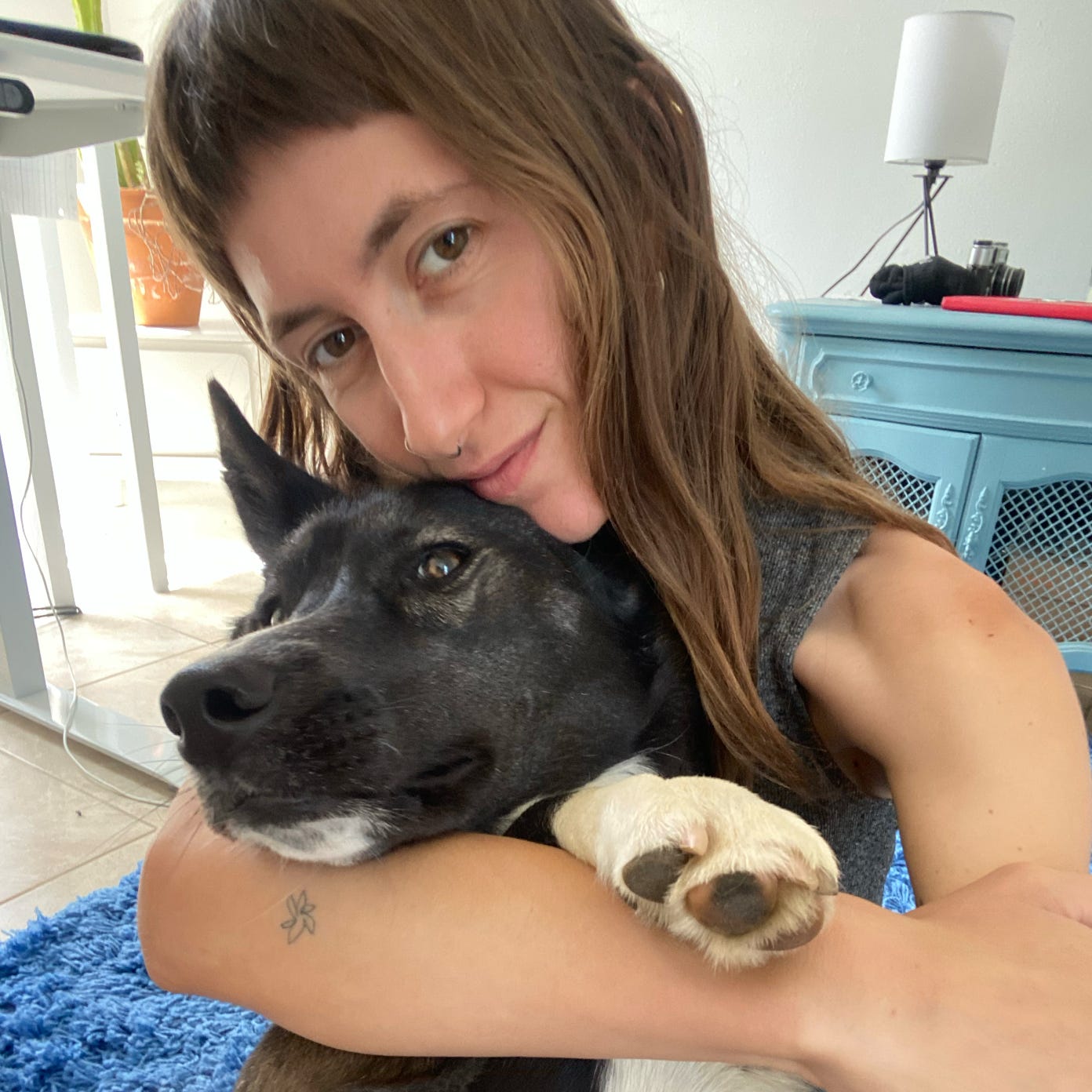
Maisa Imamović is a researcher, web designer/developer, and experimental educator who now wrote a book called Maisa in Webland: Detouring UX Destinies.
What is Maisa in Webland?
Maisa in Webland: Detouring UX Destinies examines contemporary web design traps, their consequences on the user, and how creative technologists counter these conditions through inventive online practices. UX Destinies traces how behaviors like stalking, teasing, and ghosting have become central to survival, care, and belonging in capitalist society. Driven by the urge to resist designs that script these destinies, Maisa (me) in Webland follows conversations with Maisa’s (my) digital sages, who share methods for thriving online, while also confronting the elephants in the room — automation and the precarity of being a woman — revealing how capitalist forces continue to erode even the little hope these practices spark.
Why did you write it?
Migrating from the Netherlands to the US during my research made clear how internet debates and practices differ culturally and politically here and there. Internet liberation feels more tangible in Europe, where cultural funding supports experimentation; in the US — reliant on private funding or none at all — it’s more desired than doable. There is simply scarce cultural funding in the US, pushing many creatives to rely on private money, and weird social relationships that come with it. If you don’t want to depend on cybersecurity-bro philanthropy, academia is still currently one of the only places where creative technologists can access the resources needed to pursue larger projects that can be impactful. Beyond teaching, those purposes can expand into establishing academic labs or using the resources provided by the academic institutions to gradually develop an independent studio practice that bends and challenges the corporate vision for the internet. At the same time, academia is competitive and, due to its political issues, especially after Trump’s re-election, it sucks right now. The majority will say that, especially those who are not in it. The emerging right-wing obsession with automation as a stand-in for “autonomy” casts a bleak shadow over education. Under these conditions, many talented, experimental internet thinkers and practitioners drift toward private capital. And we all know how much ideas can suffer from this. Technically, the full potential rarely materializes and projects often end up looking like an existing product, but now also made by artists. In Europe, where mere geography is not rich enough for the same scale of political extremism to proliferate and where there is actually plenty more cultural funding, creatives have more agency to shape their social dynamics and forms of their ideas. Forms are way more experimental and professionally bold — the same kind that in the US, I’d only see pursued by undergraduate students. They’d never dare pursue those ideas on a bigger scale and beyond the classroom. I sometimes miss the days when I complained about Dutch cultural funding for constraining my ideas. I still think that there are legit limitations to an extent, but at least it offers the chance to fail, recalibrate, and move on to the next—possibly better—project without as many financial or social consequences. In any case, these conditions reshape what liberation means, a nuance often missing in internet discourse. Both systems are limiting in their own ways, and both can be liberating if we pay closer attention to the contexts they emerge from. The methods I explore in my book confront these constraints and conditions, searching for the spaces where liberation can still take shape.
Beyond countering internet cynicism with practical ways to “shut up and participate in building the web,” I also wanted to make media theory accessible to younger generations so that they’re still historically informed. Understanding the evolution of the web — especially the 90s era when everyone online participated in building the web — can spark new experiments and theories for the contemporary web, the not so exciting one. By media theory, I don’t only mean reading the canonical texts by the Benjamins of the world. I also mean theory-ing: treating theory as something playful, grounded in personal observation. Anyone who’s ever been online will get excited about thinking about their favorite and least favorite websites, online experiences, and online wishes - if you ask them. But theory and theorizing alone is not enough. Left on its own, it often breeds doomers who opt out of platforms—and, eventually, out of social life altogether—proving only how deeply social media companies have defined what “social” means both online and offline. As an educator, my goal in asking these questions is ultimately to guide students toward critical coding practices. Coding while being critical creates new kinds of online experiences, whether lasting or ephemeral. These moments show that there’s more to life than isolation, and more to the internet than the dominant corporate vision. The internet is still so young!
Lastly, receiving Dutch funding — to turn my research into a book — just as Trump was elected and censorship intensified made the project feel urgent, and far safer to pursue as a book than online activism. As an opinionated PhD candidate on an F-1 visa in the US, I’m more cautious than I’ve ever been as a user.
Who or what inspired you?
Literally all the digital sages in this book!! Alex Quicho, Amad Ansari, Anja Groten, Bogna Konior, Chia Amisola, Daniel Shiffman, Kameelah Janan Rasheed, Kristoffer Tjalve, Lilian Stolk, Marie Williams Chant, Maya Man, Nadia Piet, Olia Lialina, Rachel Rose O’Leary, Sarah Friend, Tara McPherson, Theo Ellin Ballew, Tiffany Shlain, Valerie Fuchs, Warren Sack. I shouldn’t forget Terry A. Davis and Ashley Jones :) AND my passion for coding AND my desire to preserve coding practices amidst automation <3
You can pre-order Maisa’s book.
𖠰𐂂𖣂𖢔𖠋𓍄𓇥𓋜𓐬
Field notes
1.
»People will say, I just post for myself, which is a lie. They say that because they feel it’s morally better to be that way, and I really disagree with that. It’s okay to feel like you’re performing and even want to perform a bit. That’s not evil. It’s a condition of living. I’ve adopted a [Erving] Goffman-esque philosophy of performance online. Everything is a performance.«
— Maya Man in The Choreography of Posting Online.
2.
Web Curios. The annual reminder to ditch this newsletter and read Matt Muir’s weekly internet canon.
3.
Call for Participation: Orbital Studies Magazine (Dec 10), MissVideo4u (Dec 15), Open Hardware Summit (Dec 21), and Phrack 73 (2026).
4.
Poetic Web Calendar: River Computer (Dec 1, SF), Chinatown JS (Dec 2, NYC), presentation partiii (Dec 3, Online), More than a book club (Dec 4, CPH), Are.na Annual (Dec 12, NYC), Rasuk (Dec 12, NYC), Press Play (Dec 12-13, NYC), Prophecy (Dec 13, SF), and The Web You Want (Apr 17, Amsterdam).
⋆꙳•̩̩͙❅*̩̩͙‧͙ ‧͙*̩̩͙❆ ͙͛ ˚₊⋆
Wayside flowers

Last email was sent to 5029 inboxes. Fifteen people support me with a paid subscription. You can send questions, comments, products, sites, links, and more to kristoffer@naiveweekly.com. I read everything you send me :)
Do you sometimes feel like you have done enough talking? That’s me lately. Nevertheless, thanks for reading and listening. It means a lot that you care.