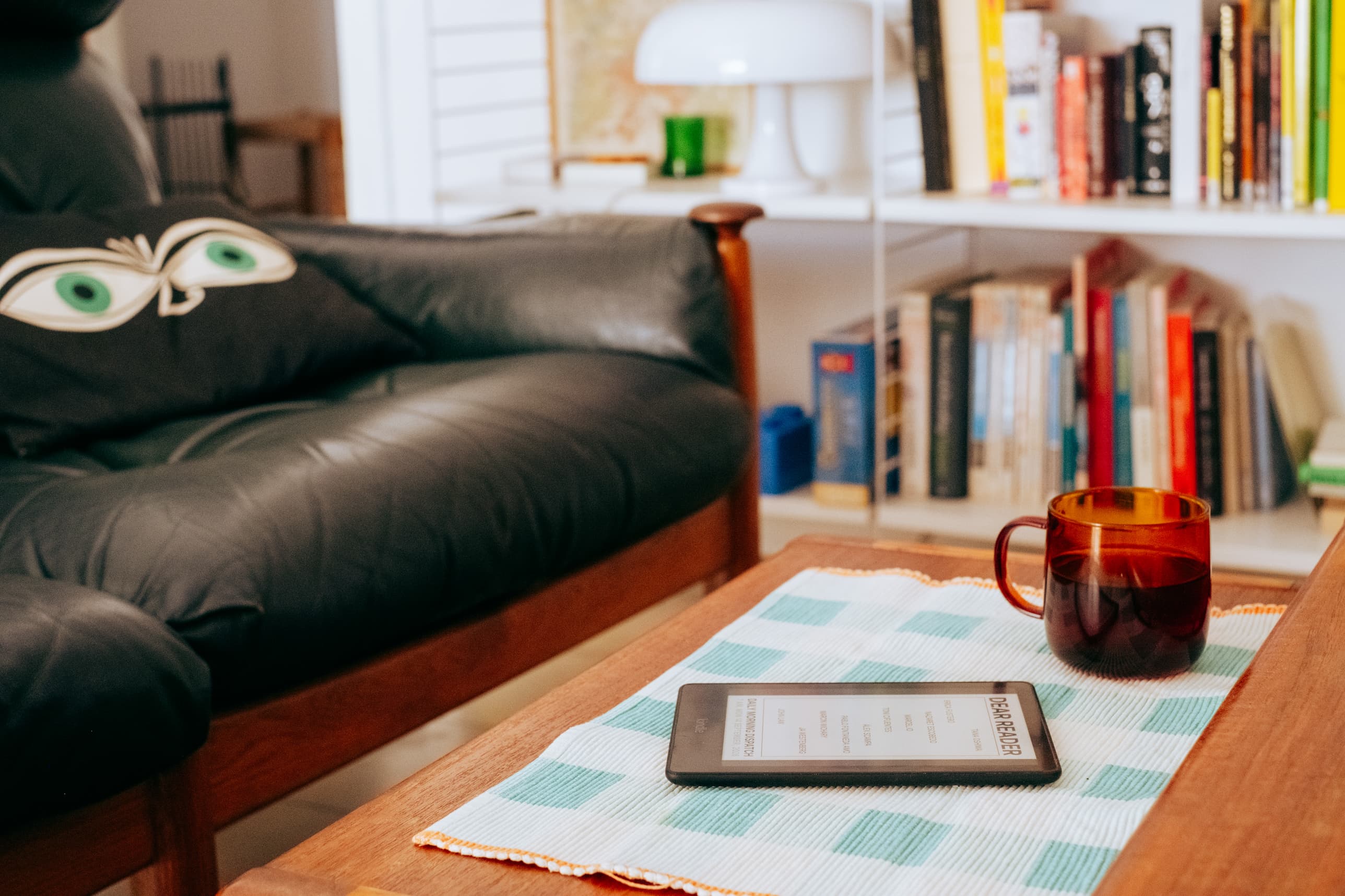
Javier Arce: Every morning I switch on my e-reader and enjoy a cup of coffee while I read the blogs I like, putting off, for as long as I can, the moment my attention inevitably drifts to social media.
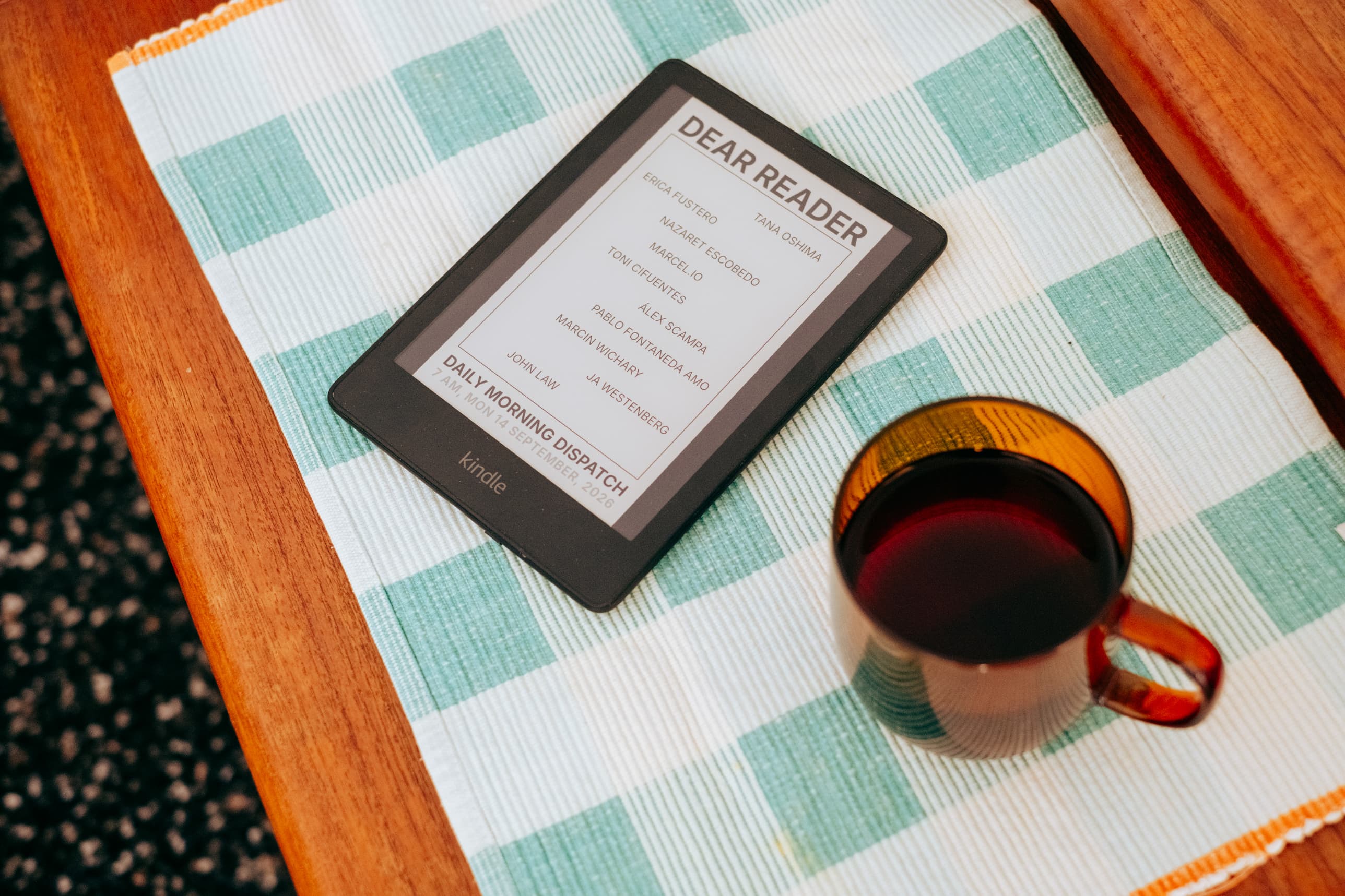
It’s a simple process. I turn on my Kindle, type in my passcode, and awaiting me is a new book that contains a handful of posts from my favorite blogs, plus articles I picked the day before. It works thanks to an app I made, Dear Reader, which compiles the latest posts from blogs I follow, generates an epub, and delivers it to my Kindle at six in the morning.
The daily flow of posts to my e-reader lets me make a small dent in the endless list of sources overflowing my feed reader of choice, Feedbin. I used to have to empty out the RSS reader completely by declaring bankruptcy and marking everything as read to avoid feeling bad about having hundreds of unread texts. Now, by narrowing down the blogs that reach me, and from reading them on my Kindle, I've found a way to make peace with my digital hoarding. I still have the impulse to subscribe to feeds, but I don't add them to Feedbin as often these days because I get my recommended daily dose of blogs from my e-reader. I think the success of Instagram and TikTok lies in the fact that you can follow thousands of accounts without feeling overwhelmed, because they manage the presentation of the content. In contrast, with a feed reader, the more blogs you subscribe to, the more content gets added to the pile (and the more you feel like a modern Sisyphus).
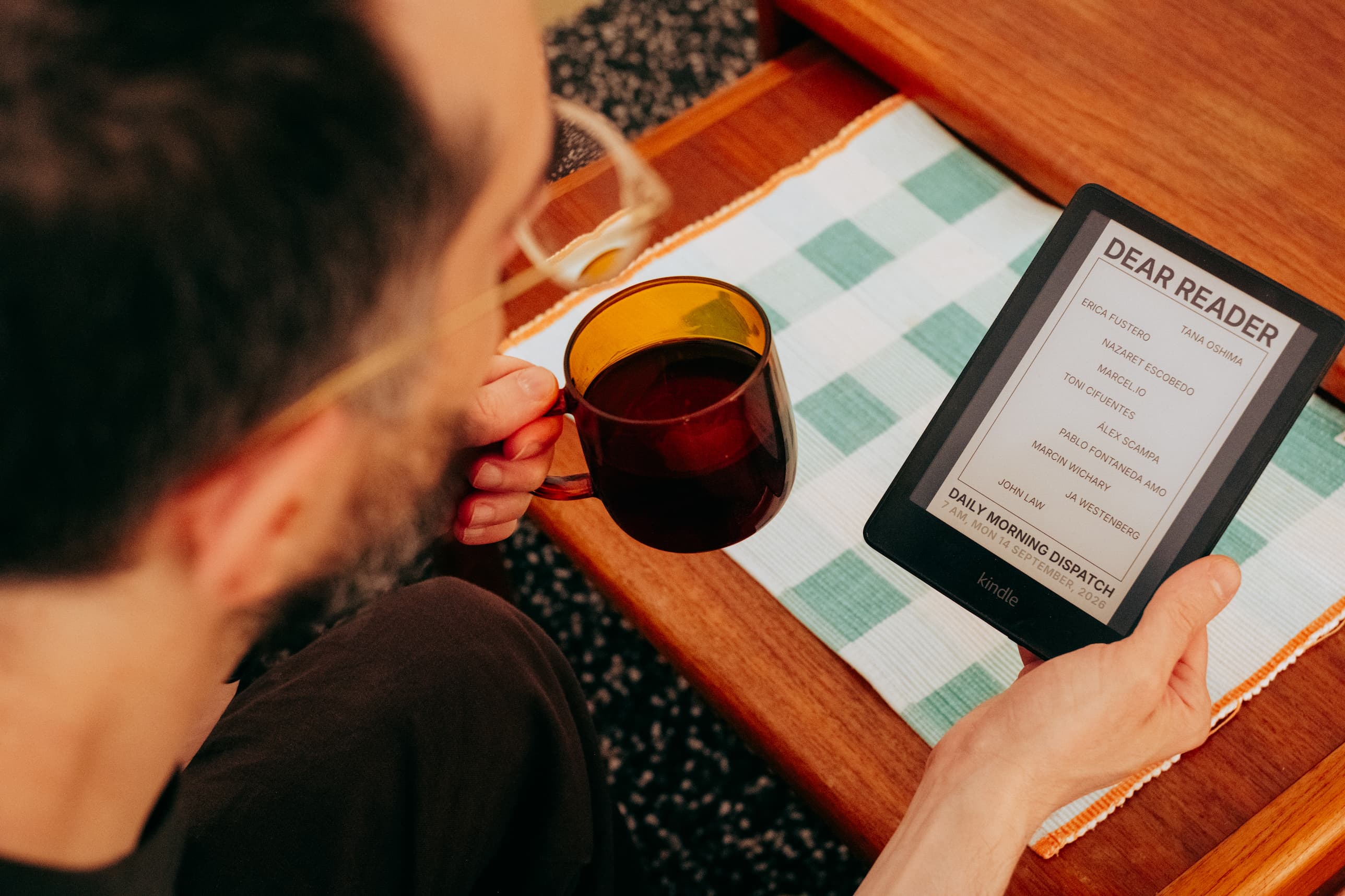
I also feel more connected to people whose online presence is limited to their personal websites (how do you all do it? I admire you). As an experiment, for a few weeks I also sent myself the top-rated posts from Bubbles, but reading personal texts from people I have no connection with didn't work for me, so after a few days I removed that feed from the app. The posts felt too random and non-contextual, and I missed the personal relationship.
Like any good magic trick, this system works thanks to a careful arrangement of its elements: the posts I read come from a list of my favorite blogs (the ones I keep in Feedbin in a folder called "Always"), and they cover a wide range of topics and lengths, from a handful of sentences to a few pages. Add to that reading them on a device with a non-reflective screen, one that makes it hard to browse the internet (and therefore hard to get distracted), and the result is that building a routine around reading becomes very easy. I never planned any of this. It started as a small idea (wouldn't it be cool to connect a feed reader to a Kindle?) and somehow evolved into this ritual: every morning, this flat box contains a surprise in the form of posts from people I like and find interesting. And this ritual, in turn, makes my mornings richer and more varied.
Not everything about this setup is ideal, though: I don't like Amazon, and I don't like reading on a device that's part of a closed, hostile ecosystem. If you want an example of that hostility, just download the Send to Kindle app, use it for a while, and you'll quickly see what I mean. It is an app that literally has just one job and doesn't do it well! And yet the hardware design, the screen resolution, and the fact that it can receive files by email, which makes it easy for me to automate sending books to it, complicate the decision to abandon it, for now.
All this convenience doesn't stop me from imagining an alternative physical companion for Dear Reader, and after seeing projects like reframe.camera or Are.na Frame, I dream of building my own reader for blogs, articles, and newsletters. Something that would allow me to pause a given feed right from the device if it stopped interesting me, mark certain posts as favorites and automatically share them on my blog, and jot down words or phrases that would later be archived in an Are.na channel or on my website.
And there I would stop, because it's incredibly easy to fall into the trap of improving a system to the point where its original purpose (which in my case is simply to have a good time reading my favorite blogs) gets twisted and turned into its opposite. A device like the one I'm describing could, for example, know which texts I read and which I don't, and remind me every so often that I have posts waiting, or give me all sorts of stats and streaks… which comes dangerously close to turning a pleasant reading experience into a mandatory, quantified task. So I'll keep learning about e-ink displays and ESP32 microcontrollers, and thinking about an ideal reading experience that fits into my newfound routine without turning my mornings into a competition.